design practice
Grassfields woodworking: everyday objects and ceremonial design
In the Central-African Grassfields, the same woodworker makes everyday stools and kitchen utensils and designs ceremonial pieces—a concrete connection between practical craft and ceremonial design.
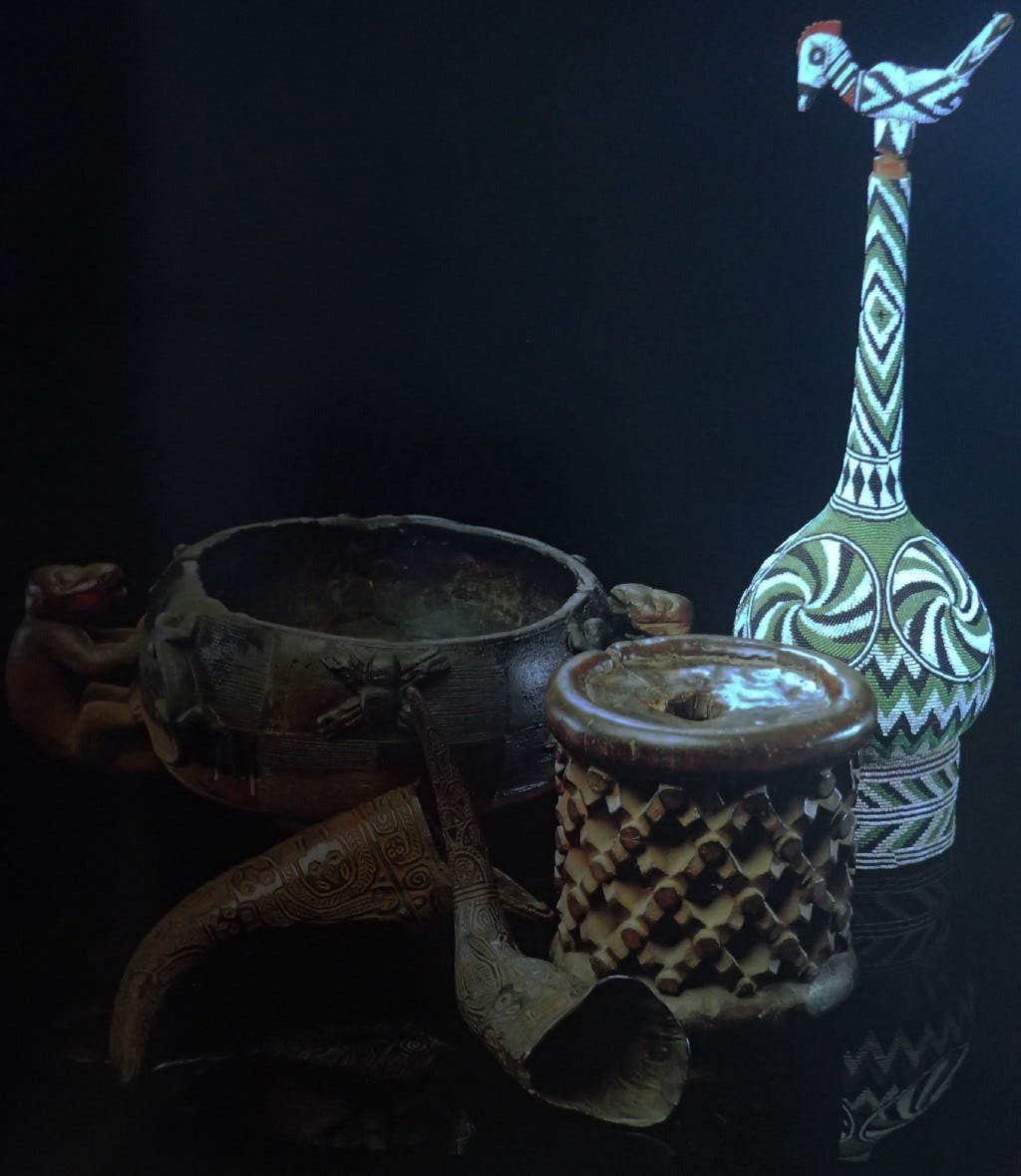
Grassfields: the woodworker and the sculptor
In the Central-African Grassfields, everyday woodworking and ceremonial design belong to the same maker’s practice. The woodworker producing and selling stools or wooden kitchen utensils is also the sculptor designing ceremonial pieces. These include the ‘Bamileke stools’ found in museums outside the continent: the maker of household objects is also the designer of those ceremonial works.
Bamanan: farming tools and jewelry
In the Bamanan region, blacksmiths produce farming tools such as hoes and dabas, as well as knives. The same people also make jewelry and decoration items. Here, too, the distinction between an everyday tool and a decorative object does not mean a distinction between their makers.
Tuareg: tents, saddles and jewels
In the Tuareg area, the Tinedan leatherworker’s production includes tents and saddles as well as world-famous Tuareg jewels. This is another specific example of a craft practice whose range encompasses both everyday objects and jewelry, rather than assigning them to separate makers.
Design thinking: a process that loops back
David Kelley, founder of IDEO, describes design thinking as “not a linear path” but “a big mass of looping back to different places in the process.” The author suggests that calls for more emotion in design and deeper connections between designers and their social context could make the methodology even more African.
Explore Kabakoo’s news, reports and stories.